
Starwater Ducks
We are a small family farm that specializes in two rare, threatened, heritage breed ducks. The Cayuga Duck and the Ancona duck are both some of the best ducks for pets, eggs, and meat. We sell mostly eggs for eating or hatching and ducklings but occasionally have adult ducks available as well.
For Ancona Ducks, contact Jacqueline: 321-304-9350, starwaterducks@gmail.com
For Cayuga Ducks, contact Ken: 321-508-2748, starwaterfarm@outlook.com

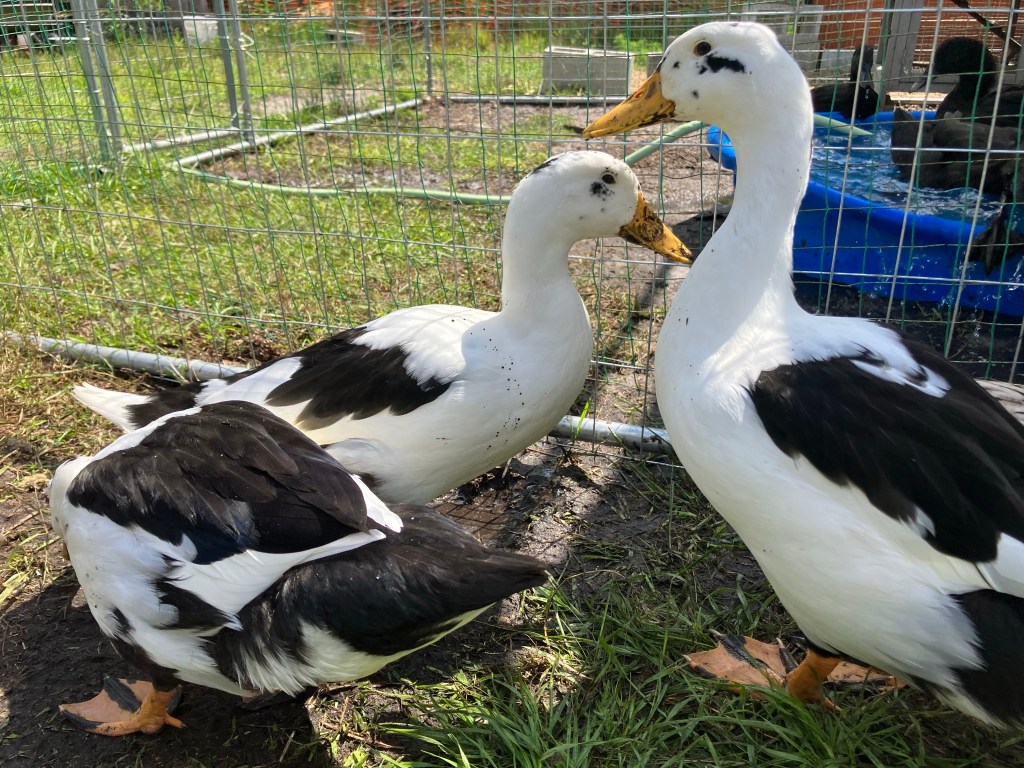
Ancona Ducks
A beautiful Heritage Duck
Each Ancona is born with white and one of several color shades, and besides that surprise each duckling is one of a kind with a pattern as unique as our fingerprints.
The perfect Duck
This is the only duck that hit all of my high goals for a starter flock. I wanted a good forager for our country Florida home, a good egg layer, a friendly duck, and one that had a possibility of becoming broody. I couldn’t find any from a hatchery or locally.
Threatened
Ancona ducks were classified as critically endangered by the American Livestock Breeds Conservancy in 2015. We want to create a new gene pool using two widely separated strains, thus hopefully helping to increase the overall number of good Anconas. We got our first generations from Estes Hatchery and a private breeder near Ocala, Florida.

Cayuga Ducks
As our first batch of Cayugas grew up and became the adults they are I realized two things: first, that they are far more gorgeous in real life. A picture just cannot properly show the gem-like shine of colors on their feathers. Also, I realized that they are WAY larger than I anticipated. I think Black Jack and Valentine may need to be renamed Fatty-Boom-Boom and Thunder Mountain.
As I understand it, one of the several reasons that the Cayuga ducks are currently on the list of Threatened duck breeds is that there is a lack of genetic gene pool in many areas. Because of this we collected our first generation flock of Cayugas from 4 separate locations. First we hatched out 4 from eggs purchased through a private breeder near Tampa, Florida. Then we ended up with an additional one from a different private breeder right here in central Florida. Next we received 5 from Stromberg Chickens (they were weird looking chickens alright). Finally we received 3 from Metzer. Because we love Metzer.
We originally got our Cayugas because we wanted to keep an additional variety of rare ducks to increase their numbers and because we were hoping that hawks and eagles in our area would mistake the cayugas for crows and leave our ducks alone. With this huge size I don’t see how anything smaller than my car could carry off one of these feather puppies.
I highly recommend these ducks as more than being ornamental. They lay great eggs, often in shades of black and gray as well as a creamy color towards the end of the laying season. Being so large, I could see that they would make a great meat duck. I see their foraging skill as well above average, I’ve only seen my Anconas as competition in that arena.

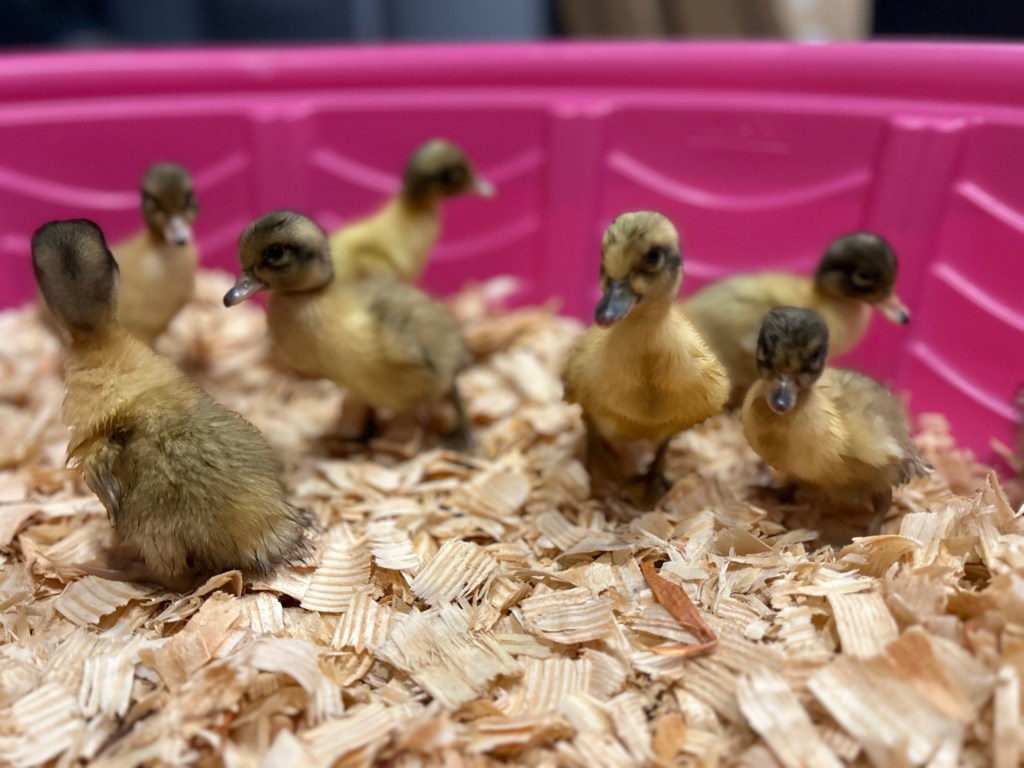
Our Original Coop
These guys rock. This feathery flock lives is our original coop, our first ducks, and the ones we can’t bear to part with. Each duck here has a story and a reason that they have become part of our family for good (not to say the other flocks don’t have permanent members because I have besties in each coop!). They are together and boy are they living the life. More into their stories later!
Farm news
- Raising ducklings
 This guide starts when you get your ducklings home, but if you are hatching at home then this guide will begin after your ducklings have moved to the brooder. First they must be dried in the incubator and be getting steadier on their feet. Usually almost 24 hours. Day 1 Set up the incubator theContinue reading “Raising ducklings”
 - Incubating Duck Eggs
 I am not trying to rewrite the book here, I just want to give a basic rundown on what we have found works for us. There are many factors that affect hatching such as outside humidity, breed of duck, the diet that the ducks are on, and much more that will be specific to yourContinue reading “Incubating Duck Eggs”